Run your whole 5e game from one app
Villains, NPCs, initiative, spells, a battle map and your players' character sheets.
I built Nemesis Codex because I was tired of running my game out of a pile of browser tabs. My group plays on it every session now. All of them use the character sheets, and a few roll with the app's dice because they like it better than real ones. Your players join free on their own phones.
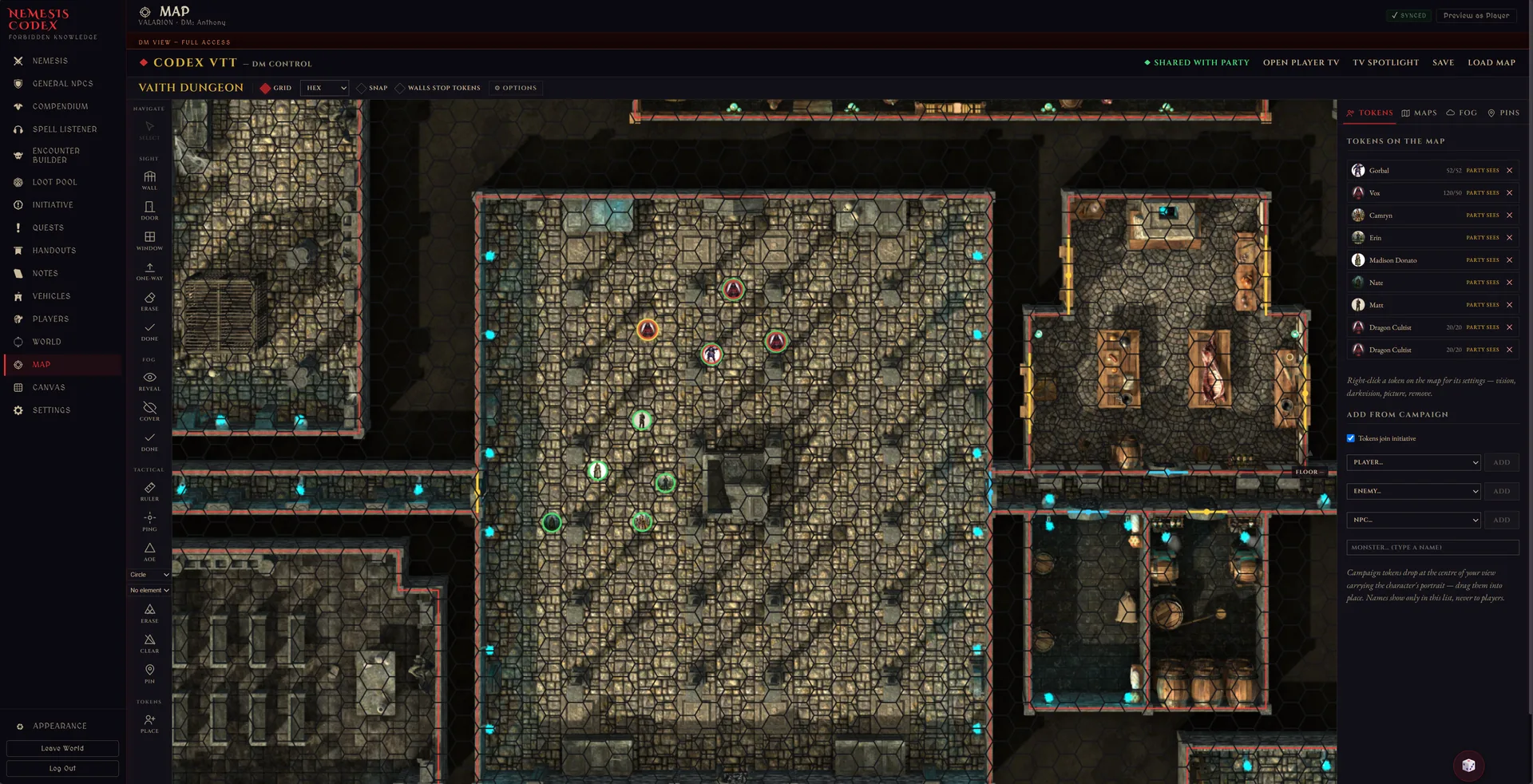
- Fog of war that remembers the ground your party has already explored
- Dynamic lighting with a darkness slider, plus light and shadow cast off the wall geometry
- Walls and doors that stop tokens, including locked and one-way doors
- Multi-floor buildings the party moves through together
- Players can drag their own tokens around from their phones
- Map imports: .uvtt, .dd2vtt, .df2vtt, Foundry scene JSON, any image you trace walls onto, or a video background
The battle map is built in
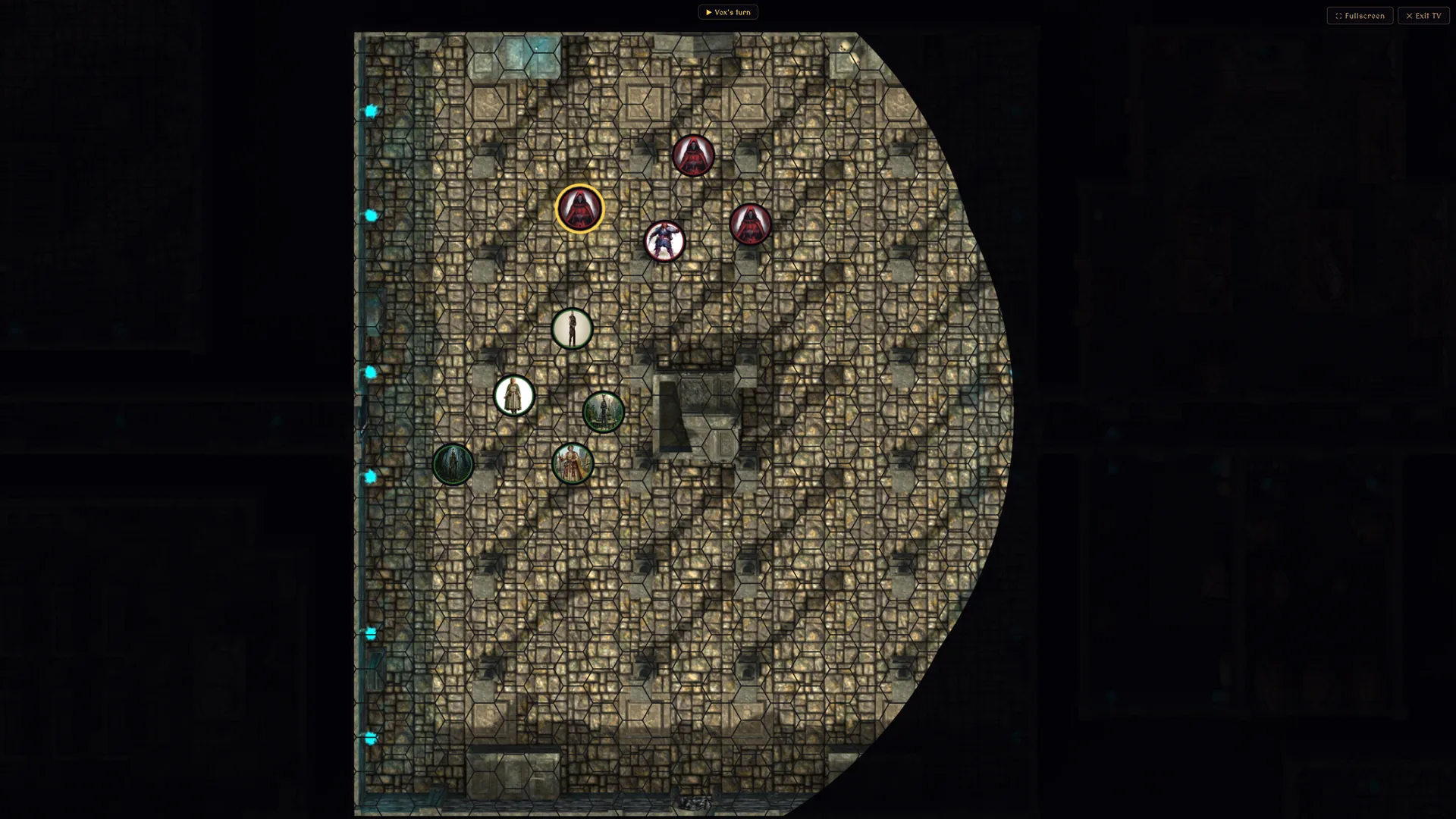
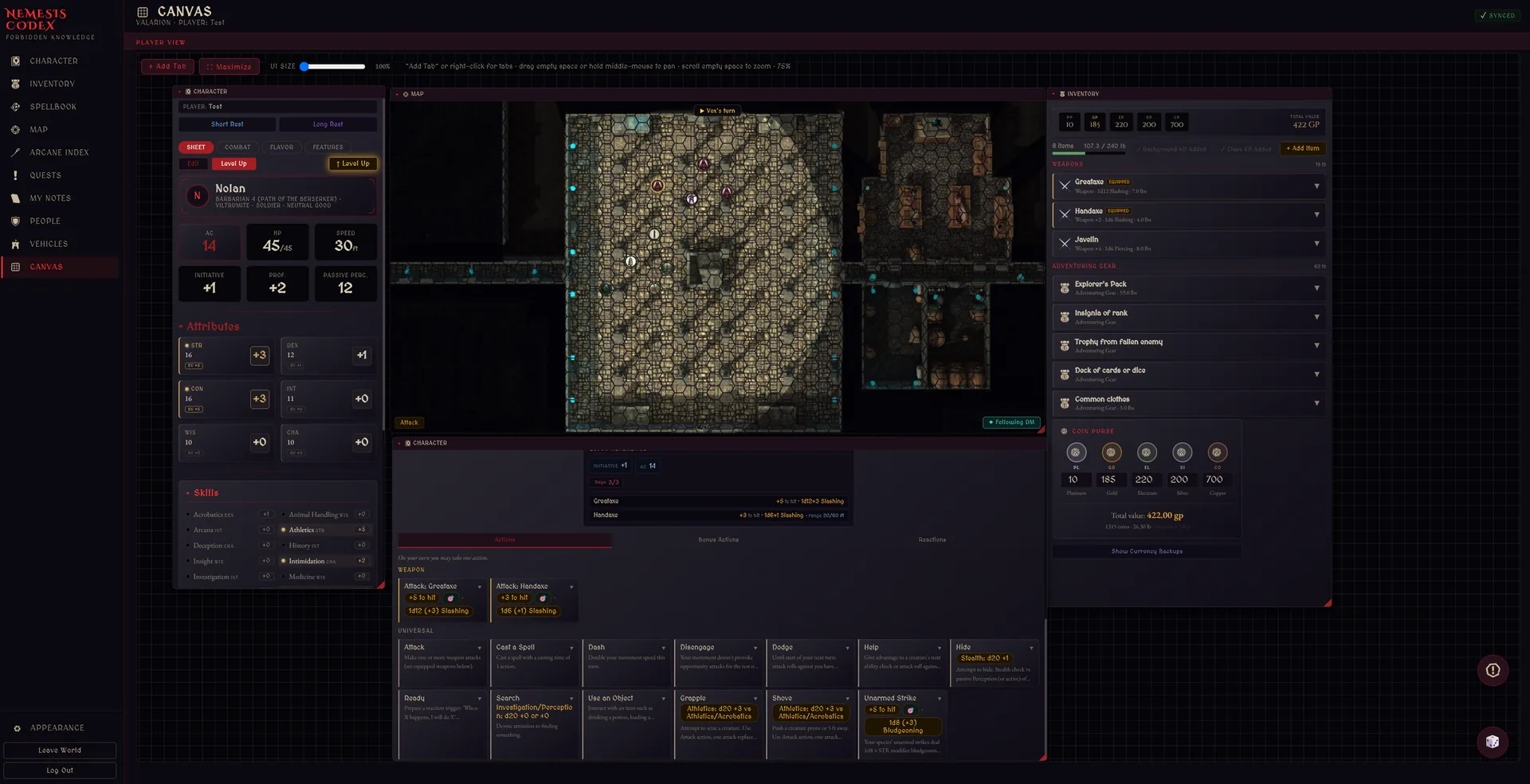
It sits right next to your NPCs and monsters. Players open it on whatever device they brought, and there's a full-screen player view for when you want the map up on a TV.
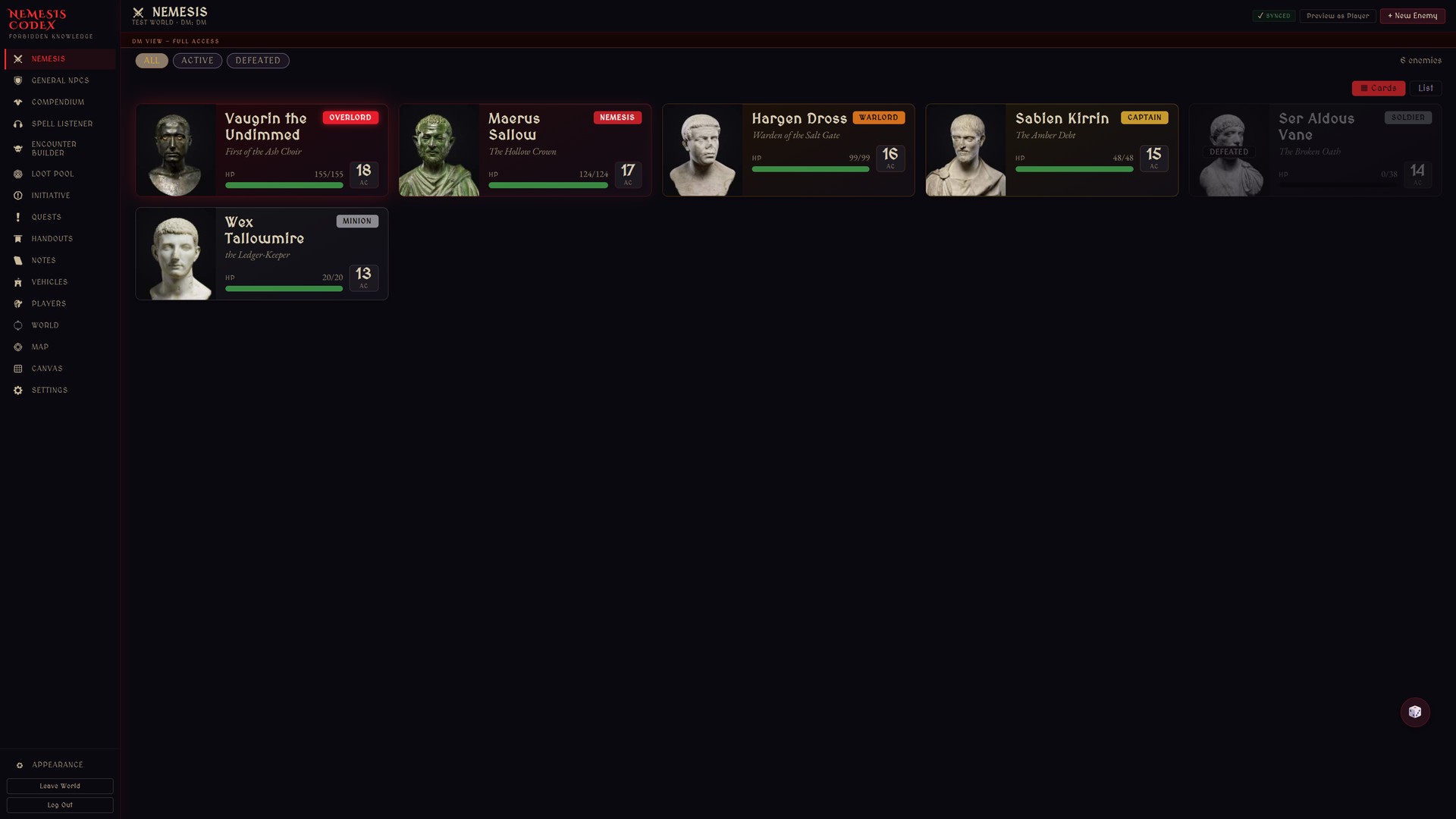
Villain Tracker
Each villain gets a card with a portrait, HP, AC and a threat rank from Minion up to Overlord. When the party finally takes one down, you mark it defeated and it stays on the roster.
Spell Listener
Turn on the mic and leave it running while you play. When someone says a spell's name, that spell comes up with its range, casting time, duration and description. If it only half hears the name, it asks you to say it again instead of guessing.
Laptop and phone stay in sync
Edit an NPC on your laptop and it's there on your phone too.
The rest of the DM side
- Character sheets
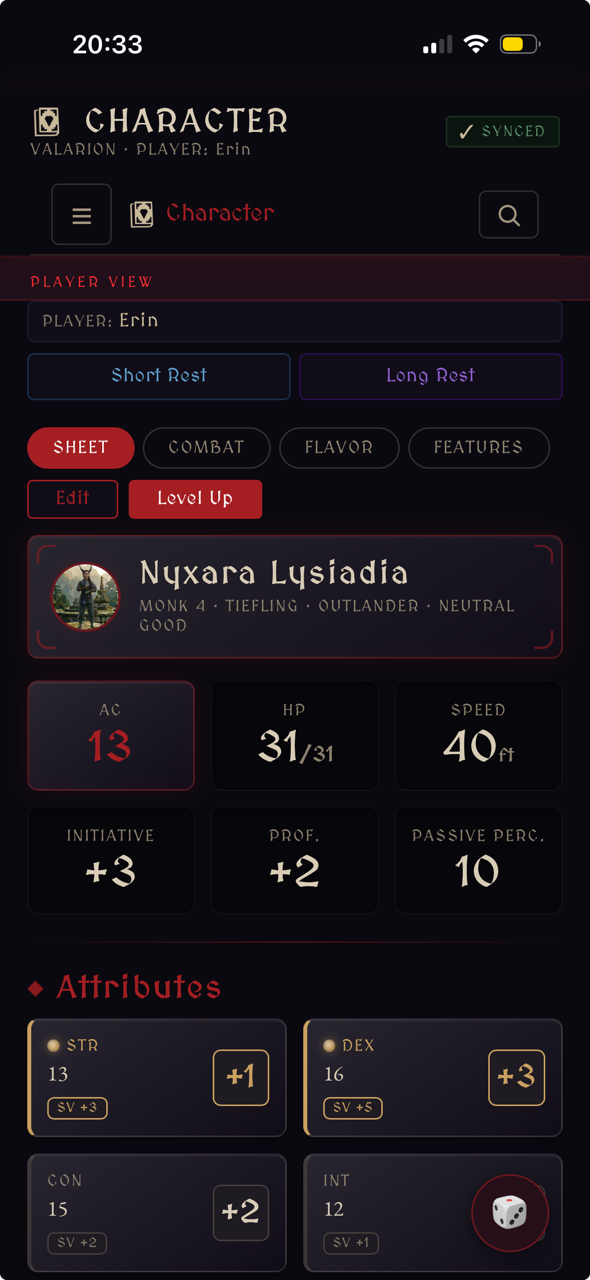
- Every player keeps their whole sheet on their phone. From your side you can check anyone's conditions or passive Perception without stopping the game to ask.
- Initiative tracker
- Sorts the turn order and keeps track of whose turn it is.
- Paste & Go Import
- Paste in a monster or spell stat block, from the SRD or wherever you found it, and Codex turns it into a full entry you can edit.
- Campaign calendar
- Tracks the in-game date. Tap a short rest, a long rest, half a day or a full day to move time forward, or save your own button for however many hours you want. It also holds any events you add.
- Encounter builder
- Build a fight by CR against your party's XP thresholds and send it straight to initiative. If it turns out too easy, you can add more monsters from the initiative tracker.
- NPCs and factions
- Who works for who and what they're hiding. Turn on Edit, tap two entries to connect them, and you get a web of how everyone is tied together.
Who it's for, and where it falls short
You can run a whole session from a phone. Here's who it suits, and where you'd be better off with something else.
A good fit
- Tables that play in person, with the map on a TV and everyone's sheet on their own phone
- Groups that play online, or have a couple of people calling in from home
Online play works today, with your fog and lighting showing on the players' own screens. It's still being worked on, and if something breaks you can tell me with the "Report a problem" link at the bottom of the page.
Where other tools do it better
- Foundry runs on your own server with a one-time license, so your games don't depend on my company existing. Codex is hosted, so you're trusting me to stay running.
- Codex has no voice or video built in, so you'd run Discord alongside it. Roll20 has both built in.
- Foundry and Roll20 run lots of game systems. Codex is D&D 5e only right now. The 2024 rules and other systems are planned, but they aren't built yet.
Pricing
Only the DM who runs the world needs a plan. None of these are on sale yet.
No per-player fees
Monthly
$8 / month
Cancel anytime.
- Unlimited villains, NPCs & factions
- Encounter builder + live initiative tracker
- Monster codex, spell & item libraries
- Your players join free on their phones
Yearly
Best Value$60 / year
Save $36 a year, over 4 months free
- Everything in Monthly
- Run multiple campaign worlds
- Session recaps & the live spell listener
- World calendar, lore & relationship maps
- Homebrew races, classes, spells & items
Lifetime
$150
One payment.
- Everything, for good, with no subscription
- Every future update included
- A founder’s badge on your worlds
Before the plans open
For now the Codex is free to try. You create an account with your email address, confirm that address from the link we send you, and then make your first world.
Frequently Asked Questions
Do my players have to pay?
No. They get their own character sheet, inventory, spells and notes on their phones without paying anything.
Can I cancel anytime?
Yes. When paid plans open, you'll be able to cancel the monthly or yearly plan from your account whenever you want, and you'll keep full access until the end of the period you paid for.
How will lifetime access work?
You pay once and you're never charged again. Every future update is included.
What happens to my worlds if I stop paying?
Once plans open, stopping won't delete anything. Your campaigns stay saved on your account, and if you pick a plan back up later you can keep editing them.